
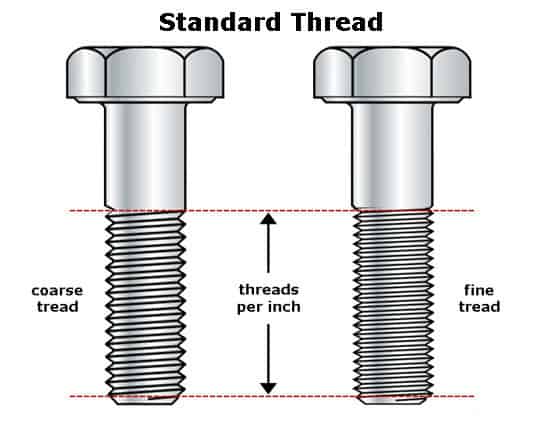
What Is The Difference Between Fine and Coarse Threads?
The difference between fine and coarse thread fasteners is the thread pitch. Fasteners and threaded rods that have a coarse thread have a larger pitch, (fewer threads per axial distance). Most commonly you’ll be using a coarse-threaded fastener than its fine-thread counterpart. Did you know fine-threaded fasteners are more difficult to find than coarse threads? Fine-threaded fasteners should be the type you choose when dealing with specific measurements.

Fine Threaded Fasteners:
- Size for size, the fine thread is stronger (in tension and shear)
- The smaller the fastener the stronger the fine thread especially for fasteners smaller than M24
- Fine threads have a tendency to loosen over time
- Require less torque o reach the coarse equivalent
- Less suitable for high-speed assembly
Coarse Threaded Fasteners:
- Less likely to cross thread
- Quicker assembly times
- Less prone to stripping when fastened into lower material strength
- Require less time to tighten
- Less susceptible to damage
Should I Use Fine Threaded or Coarse Threaded Fasteners?
The question still remains on your use case. If you have a bespoke, highly precise requirement or a project which needs a stronger tensile strength – then fine-threaded fasteners would be the best choice for you. Otherwise, for availability and a cost-effective solution, a coarse-threaded fastener should be sufficient. We would always advise that you research and know the product specification of the fastener you’re using and the required tensile strength. Otherwise, you risk failure.
The Prokura team keep records of all our product technical data sheets, please contact us today to discuss this further.